Arab slave trade
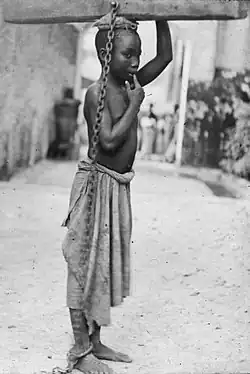
The Arab slave trade refers to various periods in which a slave trade has been carried out under the auspices of Arab peoples or Arab countries. The Arab slave trades are often associated or connected to the history of slavery in the Muslim world. The trans-Saharan slave trade relied on networks of all Arab, Berber, and sub-Saharan African merchants.
Examples
Examples of Arabic slave trades are :
- Trans-Saharan slave trade (between the mid-7th century and the early 20th century)
- Libyan slave trade (started in the 7th century, ongoing)
- Indian Ocean slave trade (between antiquity and the early 20th-century)
- Comoros slave trade (from an unknown time until the mid 19th-century)
- Zanzibar slave trade (from an unknown time until the early 20th-century)
- Red Sea slave trade (between antiquity and the mid-20th-century)
See also
- Saqaliba
- Prague slave trade
- Khazar slave trade
- Volga Bulgarian slave trade
- Black Sea slave trade
- Bukhara slave trade
- Khivan slave trade
- History of slavery in the Muslim world
References
- ^ "Slavery in Zanzibar". rmg.co.uk. Greenwich, London, United Kingdom: Royal Museums Greenwich.