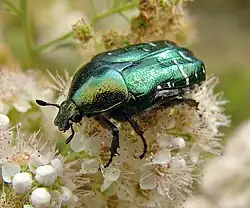
Polyphaga is the largest and most diverse suborder of beetles. It comprises 144 families in 16 superfamilies, and displays an enormous variety of specialization and adaptation, with over 350,000 described species, or approximately 90% of the beetle species discovered thus far.
Key characteristics of Polyphaga are that the hind coxa (base of the leg) does not divide the first and second abdominal/ventral plates which are known as sternites. Also, the notopleural suture (found under the pronotal shield) is not present.[1]
Etymology
The name of polyphaga is derived from two Greek words: poly-, meaning 'many', and phagein, meaning 'to eat', so the suborder is called the "eaters of many things".
Classification
The five main infraorders are:
Phylogenetic studies have also suggested that Scirtoidea (Scirtidae, Decliniidae), Clamboidea (Clambidae, Derodontidae, Eucinetidae), Rhinorhipus and Nosodendridae are independent lineages of Polyphaga that lie outside these groups.[2]
The internal classification of Polyphaga involves several superfamilies or series, whose constituents are relatively stable, although some smaller families (whose rank even is disputed) are allocated to different clades by different authors. Large superfamilies include Hydrophiloidea, Staphylinoidea, Scarabaeoidea, Buprestoidea, Byrrhoidea, Elateroidea, and Bostrichoidea.
The infraorder Cucujiformia includes the vast majority of phytophagous (plant-eating) beetles, united by cryptonephric Malpighian tubules of the normal type, a cone ommatidium with open rhabdom, and lack of functional spiracles on the eighth abdominal segment. Constituent superfamilies of Cucujiformia are Cleroidea, Cucujoidea, Tenebrionoidea, Chrysomeloidea, and Curculionoidea. Evidently adoption of a phytophagous lifestyle correlates with taxon diversity in beetles, with Cucujiformia, especially weevils (Curculionoidea), forming a major radiation.
See also
- List of subgroups of the order Coleoptera
References
- ^ Johnson, Norman F.; Triplehorn, Charles A. (2004). Borror and DeLong's Introduction to the Study of Insects (7th ed.). Belmont: Brooks/Cole. pp. 365–400, 428–429. ISBN 0-03-096835-6.
- ^ Cai, Chenyang; Tihelka, Erik; Giacomelli, Mattia; Lawrence, John F.; Ślipiński, Adam; Kundrata, Robin; Yamamoto, Shûhei; Thayer, Margaret K.; Newton, Alfred F.; Leschen, Richard A. B.; Gimmel, Matthew L.; Lü, Liang; Engel, Michael S.; Bouchard, Patrice; Huang, Diying (March 2022). "Integrated phylogenomics and fossil data illuminate the evolution of beetles". Royal Society Open Science. 9 (3) 211771. Bibcode:2022RSOS....911771C. doi:10.1098/rsos.211771. ISSN 2054-5703. PMC 8941382. PMID 35345430.
- Cranston, Peter S.; Gullan, Penny J. (2009). "Phylogeny of Insects". In Resh, Vincent H.; Cardé, Ring T. (eds.). Encyclopedia of Insects (Second ed.). Academic Press. pp. 780–793. ISBN 978-0-12-374144-8.
External links
|
|---|
|
Suborder Archostemata |
|---|
- Crowsoniellidae (Crowsoniella relicta)
- Cupedidae (reticulated beetles)
- Jurodidae (Sikhotealinia zhiltzovae)
- Micromalthidae
- Ommatidae
|
|
|
|---|
| Extant families |
- Amphizoidae (trout-stream beetles)
- Aspidytidae
- Carabidae (ground beetles)
- Cicindelidae (tiger beetles)
- Dytiscidae (predaceous diving beetles)
- Gyrinidae (whirligig beetles)
- Haliplidae (crawling water beetles)
- Hygrobiidae
- Meruidae (Meru phyllisae)
- Noteridae (burrowing water beetles)
- Trachypachidae (false ground beetles)
|
|---|
|
|
Suborder Myxophaga |
|---|
- Hydroscaphidae (skiff beetles)
- Lepiceridae
- Sphaeriusidae
- Torridincolidae
|
|
|
|---|
| Bostrichiformia | | Bostrichoidea |
- Bostrichidae (auger beetles)
- Dermestidae (skin beetles)
- Endecatomidae
- Jacobsoniidae (Jacobson's beetles)
- Nosodendridae (wounded-tree beetles)
- Ptiniidae (furniture beetles, death watch beetles, spider beetles)
|
|---|
| Derodontoidea |
- Derodontidae (tooth-necked fungus beetles)
|
|---|
|
|---|
| Cucujiformia | | Chrysomeloidea | |
|---|
| Cleroidea |
- Acanthocnemidae (Acanthocnemus nigricans)
- Biphyllidae (false skin beetles)
- Byturidae (fruitworm beetles)
- Chaetosomatidae
- Cleridae (checkered beetles)
- Lophocateridae
- Mauroniscidae
- Melyridae (soft-wing flower beetles)
- Metaxinidae (Metaxina ornata)
- Peltidae
- Phloiophilidae (Phloiophilus edwardsi)
- Phycosecidae
- Prionoceridae
- Protopeltidae
- Rentoniidae
- Rhadalidae
- Thanerocleridae
- Thymalidae
- Trogossitidae (bark-gnawing beetles)
|
|---|
| Coccinelloidea |
- Akalyptoischiidae
- Alexiidae
- Anamorphidae
- Bothrideridae (dry bark beetles)
- Cerylonidae (minute bark beetles)
- Coccinellidae (lady beetles, or God's cows)
- Corylophidae (minute fungus beetles)
- Discolomatidae
- Endomychidae (handsome fungus beetles)
- Eupsilobiidae
- Euxestidae (well polished beetles)
- Latridiidae (minute brown scavenger beetles)
- Murmidiidae
- Mycetaeidae
- Teredidae
|
|---|
| Cucujoidea |
- Agapythidae (Agapytho foveicollis)
- Boganiidae
- Cavognathidae
- Cryptophagidae (silken fungus beetles)
- Cucujidae (flat bark beetles)
- Cybocephalidae
- Cyclaxyridae
- Erotylidae (pleasing fungus beetles)
- Helotidae
- Hobartiidae
- Kateretidae (short-winged flower beetles)
- Laemophloeidae (lined flat bark beetles)
- Lamingtoniidae (Lamingtonium binnaberrense)
- Monotomidae (root-eating beetles)
- Myraboliidae
- Nitidulidae (sap beetles)
- Passandridae (parasitic flat bark beetles)
- Phalacridae (shining flower beetles)
- Phloeostichidae
- Priasilphidae
- Propalticidae
- Protocucujidae
- Silvanidae (silvanid flat bark beetles)
- Smicripidae (palmetto beetles)
- Sphindidae (dry-fungus beetles)
- Tasmosalpingidae
|
|---|
Curculionoidea
(weevils) |
- Anthribidae (fungus weevils)
- Attelabidae (leaf-rolling weevils)
- Belidae (primitive weevils)
- Brentidae (straight snout weevils, New York weevil)
- Caridae
- Curculionidae (true weevils, bark beetles, ambrosia beetles)
- Nemonychidae (pine flower weevils)
|
|---|
| Lymexyloidea |
- Lymexylidae (ship-timber beetles)
|
|---|
| Tenebrionoidea |
- Aderidae (ant-like leaf beetles)
- Anthicidae (ant-like flower beetles)
- Archeocrypticidae (cryptic fungus beetles)
- Boridae (conifer bark beetles)
- Chalcodryidae
- Ciidae (minute tree-fungus beetles)
- Melandryidae (false darkling beetles)
- Meloidae (blister beetles)
- Mordellidae (tumbling flower beetles)
- Mycetophagidae (hairy fungus beetles)
- Mycteridae (palm and flower beetles)
- Oedemeridae (false blister beetle)
- Perimylopidae, or Promecheilidae
- Prostomidae (jugular-horned beetles)
- Pterogeniidae
- Pyrochroidae (fire-coloured beetles)
- Pythidae (dead log bark beetles)
- Ripiphoridae (wedge-shaped beetles)
- Salpingidae (narrow-waisted bark beetles)
- Scraptiidae (false flower beetles)
- Stenotrachelidae (false longhorn beetles)
- Synchroidae (synchroa bark beetles)
- Tenebrionidae (darkling beetles)
- Tetratomidae (polypore fungus beetles)
- Trictenotomidae
- Ulodidae
- Zopheridae (ironclad beetles, cylindrical bark beetles)
|
|---|
|
|---|
| Elateriformia | | Buprestoidea |
- Buprestidae (jewel beetles, or metallic wood-boring beetles)
- Schizopodidae
|
|---|
| Byrrhoidea |
- Byrrhidae (pill beetles)
- Callirhipidae (cedar beetles)
- Chelonariidae (turtle beetles)
- Cneoglossidae
- Dryopidae (long-toed water beetles)
- Elmidae (riffle beetles)
- Eulichadidae (forest stream beetles)
- Heteroceridae (variegated mud-loving beetles)
- Limnichidae (minute mud beetles)
- Lutrochidae (travertine beetles)
- Psephenidae (water-penny beetles)
- Ptilodactylidae
|
|---|
| Dascilloidea |
- Dascillidae (soft bodied plant beetles)
- Rhipiceridae (cicada beetle, cicada parasite beetles)
|
|---|
| Elateroidea |
- Artematopodidae (soft-bodied plant beetles)
- Brachypsectridae (Texas beetles)
- Cantharidae (soldier beetles)
- Cerophytidae (rare click beetles)
- Elateridae (click beetles)
- Eucnemidae (false click beetles)
- Jurasaidae
- Lampyridae (fireflies)
- Lycidae (net-winged beetles)
- Omethidae (false fireflies, long-lipped beetles)
- Phengodidae (glowworm beetles)
- Rhagophthalmidae
- Sinopyrophoridae
- Throscidae (false metallic wood-boring beetles)
|
|---|
| Rhinorhipoidea |
- Rhinorhipidae (Rhinorhipus tamborinensis)
|
|---|
| Scirtoidea |
- Clambidae
- Decliniidae (Declinia relicta)
- Eucinetidae (plate-thigh beetles)
- Scirtidae
|
|---|
|
|---|
| Scarabaeiformia | | Scarabaeoidea |
- Belohinidae (Belohina inexpectata)
- Bolboceratidae
- Diphyllostomatidae (false stag beetles)
- Geotrupidae (dor beetles)
- Glaphyridae (bumble bee scarab beetles)
- Glaresidae (enigmatic scarab beetles)
- Hybosoridae (scavenger scarab beetles)
- Lucanidae (stag beetles)
- Ochodaeidae (sand-loving scarab beetles)
- Passalidae (betsy beetles)
- Pleocomidae (rain beetles)
- Scarabaeidae (scarabs)
- Trogidae (hide beetles)
|
|---|
|
|---|
| Staphyliniformia | | Histeroidea |
- Histeridae (clown beetles)
- Sphaeritidae (false clown beetles)
- Synteliidae
|
|---|
| Hydrophiloidea |
- Epimetopidae
- Georissidae (minute mud-loving beetles)
- Helophoridae
- Hydrochidae
- Hydrophilidae (water scavenger beetles)
- Spercheidae
|
|---|
| Staphylinoidea |
- Agyrtidae (primitive carrion beetles)
- Hydraenidae
- Leiodidae (round fungus beetles)
- Ptiliidae (feather-winged beetles)
- Silphidae (carrion beetles)
- Staphylinidae (rove beetles)
|
|---|
|
|---|
|
|
List of subgroups of the order Coleoptera |
Taxon identifiers |
|---|
| Polyphaga | |
|---|
| Authority control databases: National | |
|---|